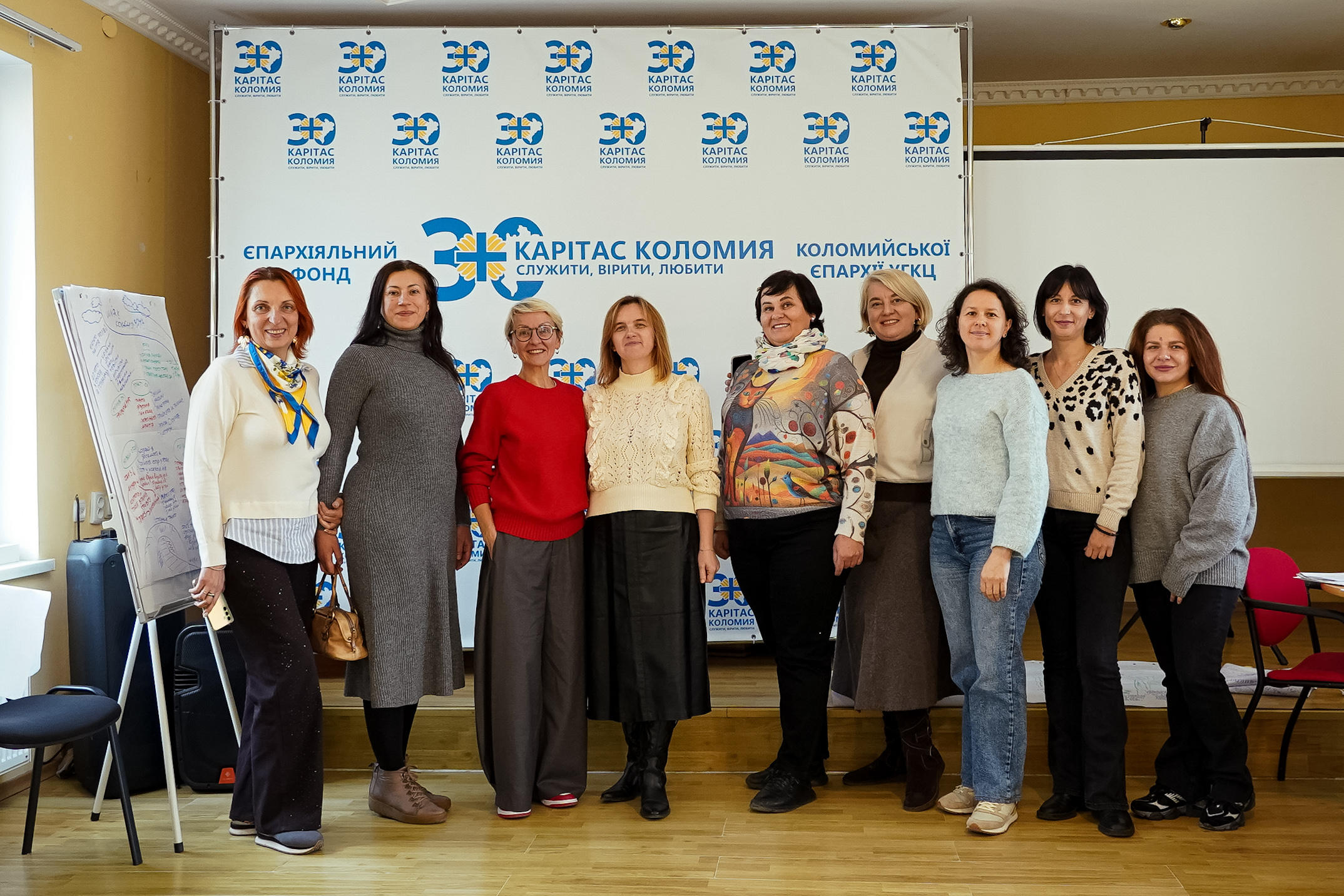
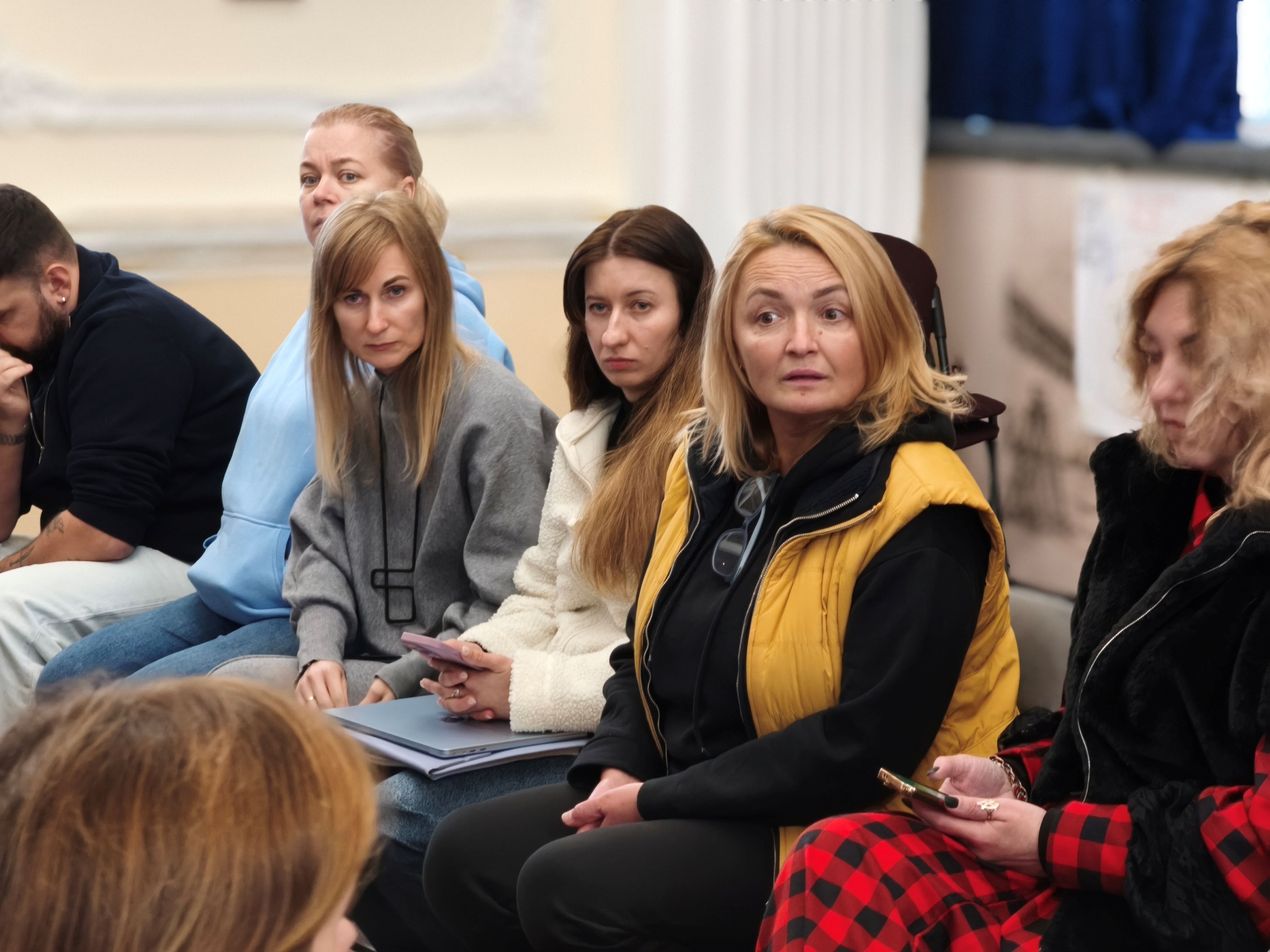
On November 12, the “Your Territory” Community Center in the Nemishaieve community (Kyiv Oblast) hosted the training “Defender at Home”. Participants discussed how a community can support the families of service members, better understand veterans’ experience, and help them adapt to life after returning from war.
The training was led by Dialogue in Action facilitators Olena Kopina and Tetiana Kalenychenko. Fedir Kalenychenko, a veteran and trainee military psychologist, joined as an expert.

Together with participants, the facilitators explored the biases and fears that can arise when interacting with veterans, worked through family challenges, and looked for ways to engage the community. Particular attention was given to the specifics of trauma and combat stress, as well as to working with feelings of guilt and shame.
An important part of the conversation was how a community can support service members’ families not only after a defender returns, but throughout the entire period of service. Formal greetings and ceremonial welcomes are no substitute for genuine attention to the needs of a person and their loved ones.
“A veteran cannot come home the same person they were before the war. Instead of heroization and a short-lived celebration with no respect afterwards, a community can support the family during active service and walk alongside the defender after their return. Simple everyday actions will matter more than grand celebrations,” said Fedir Kalenychenko.

We thank Father Yaroslav Chopan, head of the Borodianka Deanery of the Kyiv Eparchy of the OCU, for initiating and organizing the training, and Maryna Blyzniukova, director of the “Your Territory” Community Center, for co-organizing it and providing the space!
As a reminder, “Defender at Home” is a training developed by Olena Kopina, a Dialogue in Action facilitator, to prepare communities for engaging with veterans and supporting their families. Its goal is to help people better understand the experience of service members and their loved ones, take the consequences of war into account, and find practical ways to provide support.
You can access the training manual here.